
When the Warehouses Came Alive: UK Raves in the 80s and 90s
There was a time when you could drive through the outskirts of a British town late on a Saturday night and have absolutely no idea where the night was going to end.
No glossy nightclub. No VIP list. No overpriced cocktail menu. Sometimes, not even an address.
Just a phone number scribbled on a flyer, a cryptic message passed between mates, and the promise that somewhere behind a row of boarded-up factories or down a muddy country lane, there was a party waiting to kick off.
Welcome to the world of Acid House and the UK rave scene.
For those who weren't there, it's difficult to explain quite how strange and exciting it all felt. In the late 1980s and early 1990s, raving wasn't just about going out for the night. It felt like stepping into something that wasn't supposed to exist. The parties appeared almost out of nowhere, often in disused warehouses, abandoned industrial units and forgotten corners of the countryside.
And once you found one, you knew you'd found it.
The sound of something new
The arrival of Acid House changed everything.
The music was strange, hypnotic and relentless. The squelching sound of the Roland TB-303 seemed to burrow straight into your brain, while drum machines pounded away with a kind of mechanical insistence. It wasn't polished in the traditional sense, and that was precisely the point.
This wasn't music designed for sitting politely in the corner with a pint.
It was music for losing yourself.
The early Acid House scene brought together people who might never normally have crossed paths. Students, club kids, football lads, artists, DJs, office workers and plenty of people who simply fancied seeing what all the fuss was about.
For a brief moment, the usual rules seemed to disappear.
You could walk into a warehouse and find yourself dancing alongside someone you'd probably have avoided on the high street. Underneath the strobe lights, none of that seemed to matter quite as much.
The music was the common language.
Finding the rave
One of the most exciting things about the early rave scene was that you had to work for it.
There was no Google Maps pin dropping you directly at the entrance. No Instagram story telling you which room had the best DJ. No reviews telling you whether the toilets were any good.
Quite often, you didn't even know exactly where you were going.
You'd meet up with mates, pile into a battered car and follow a convoy of vehicles heading towards some industrial estate you'd never heard of. Then you'd turn off the main road, drive down an increasingly questionable track and hope you hadn't been sent on a wild goose chase.
Eventually, you'd see the signs.
Cars parked everywhere.
People walking along the road in the middle of the night.
A distant bassline thumping through the darkness.
And then you'd spot the warehouse.
That was the moment.
The doors would open and suddenly you'd be swallowed by noise, sweat, smoke and flashing lights. Inside, the place could look like absolute chaos. Bare brick walls. Condensation dripping from the ceiling. Cables running everywhere. Temporary sound systems that looked like they had been assembled by someone with a van and a dream.
But none of it mattered.
The atmosphere was electric.
Acid Casuals and the look
The fashion of the era was almost as recognisable as the music.
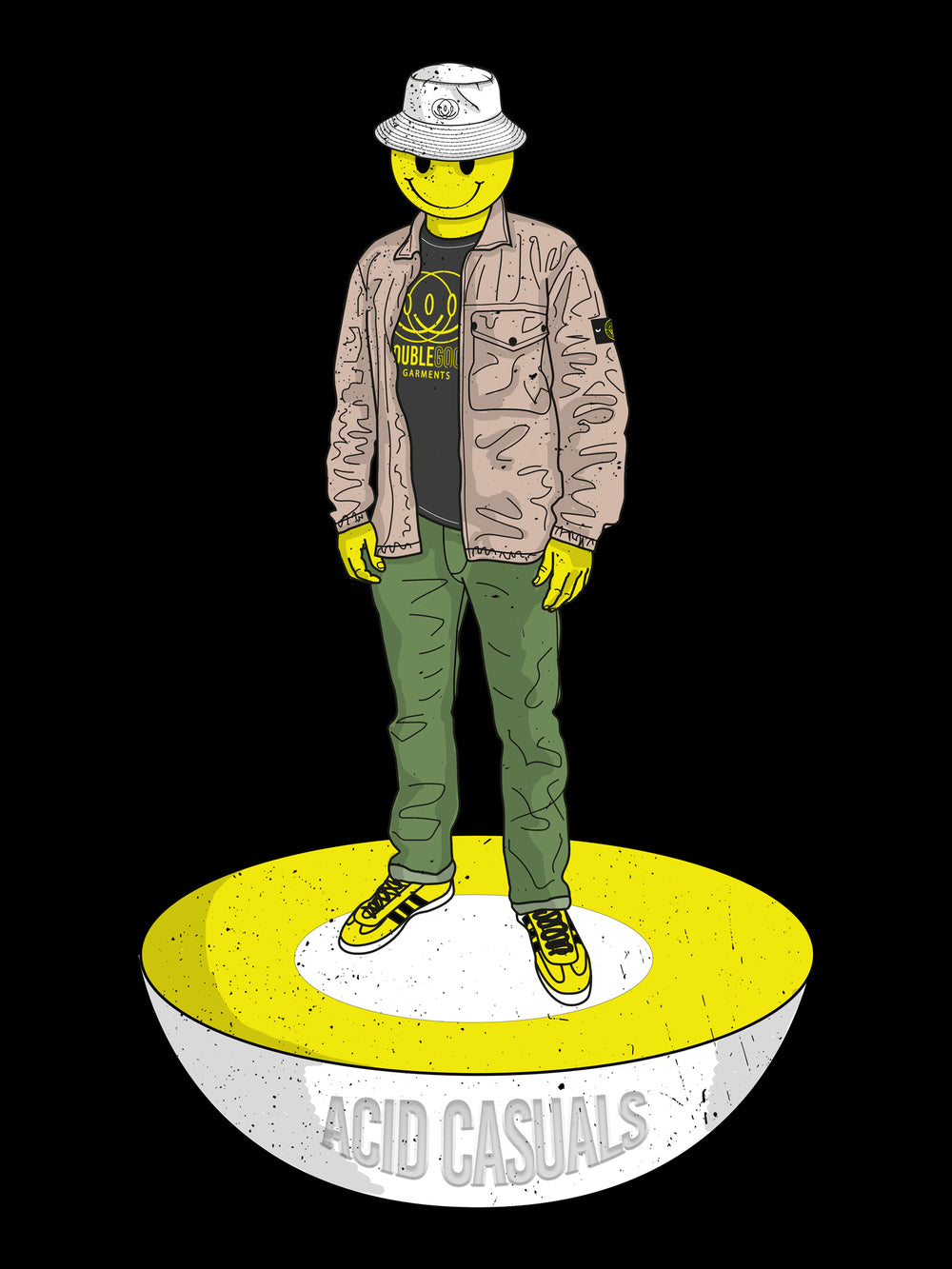
The acid casuals look became part of the culture, blending the terrace-inspired style of football casuals with the more colourful, psychedelic energy of the rave scene.
Sportswear, trainers, shell suits, bucket hats and bold colours became part of the uniform. There was something deliberately casual about it all. You could turn up looking like you'd just wandered out of the pub, only to spend the next six hours dancing in a warehouse until the sun came up.
The look wasn't about dressing up for the approval of some nightclub bouncer.
It was about belonging.
Of course, there were plenty of people who didn't fit neatly into any particular style. The rave scene was never quite as uniform as photographs from the era might suggest. It was messy, eclectic and constantly evolving.
But you could usually spot the ravers.
They had that look in their eyes.
They knew where the next party was.
The warehouse experience
There's something about dancing in a disused warehouse that you can't really recreate in a modern club.
Perhaps it's the sense that you're somewhere you shouldn't be.
These buildings were never designed for dancing. They were cold, echoing and often falling apart. Yet thousands of people would squeeze into them, transforming empty industrial spaces into temporary temples of music.
The walls would shake.
The floor would bounce.
The air would become thick and warm.
Then, just when you thought you couldn't possibly dance for another minute, the DJ would drop a tune that everyone recognised and the entire room would erupt.
It was tribal in a way, but also deeply British. There was a shared understanding that something special was happening, even if nobody could quite explain what it was.
The party could be euphoric one minute and completely unhinged the next.
And yes, things could get edgy.
Not every night was magical. There were fights. There were dodgy characters. There were people who took things too far. The combination of huge crowds, illegal venues and a lot of substances could create an unpredictable atmosphere.
But for many people, the excitement was part of the attraction.
You never quite knew what the night would bring.
The police, the press and the crackdown
As the rave scene grew, it inevitably attracted attention.
The authorities weren't exactly thrilled about thousands of people turning up at unlicensed venues in the middle of the night. Neither were local residents, particularly when an entire industrial estate suddenly became the centre of a massive party.
The media also discovered the story.
Soon, the newspapers were full of stories about Acid House, drugs, "dangerous" parties and the supposed moral decline of an entire generation.
To anyone actually involved, some of the coverage felt wildly exaggerated.
But there were real concerns, too. The scene was becoming enormous, and controlling massive crowds in makeshift venues wasn't easy.
Eventually, the pressure increased.
The famous free parties and warehouse raves became harder to organise. Police roadblocks appeared. Venues were shut down. Laws were introduced that made it increasingly difficult to hold large unlicensed gatherings.
The authorities could close the warehouses.
They couldn't stop the music.
The end of an era?
By the 1990s, the rave scene had evolved.
The illegal warehouse parties still existed, but the culture had also moved into legitimate clubs, larger venues and massive organised events. The sound changed, too. Hardcore, jungle, techno, trance and other styles began pulling the scene in different directions.
The wild, secretive energy of the late 80s was gradually becoming part of something much bigger.
For some, that was progress.
For others, it was the beginning of the end.
Once the flyers became more professional and the clubs became bigger, some of the mystery disappeared. What had started as an underground movement was becoming an industry.
But the spirit of those early nights never completely vanished.
You can still hear it in modern electronic music. You can see it in festival culture. You can spot echoes of it whenever a group of people decides that an ordinary night out isn't quite enough.
Remembering the warehouses
Looking back, it's easy to romanticise the UK rave scene of the 80s and 90s.
And perhaps we do.
Memory has a funny way of sanding off the rough edges. The freezing warehouses become legendary venues. The dodgy toilets become funny stories. The long drives become adventures.
But there was something genuinely remarkable about that period.
A generation discovered a new kind of freedom through music.
They found places that had been abandoned and made them come alive again.
They danced until dawn in buildings that were never meant to hold them.
They created communities, friendships and memories in the most unlikely places.
And for one night, at least, the outside world could wait.
The sun would eventually come up. The warehouse would eventually empty. The sound system would be packed into a van, and everyone would disappear back into the morning traffic.
But the feeling stayed.
That feeling that somewhere, somehow, you'd been part of something that couldn't quite be explained to anyone who wasn't there.
That's the thing about the old rave days.
You didn't just go to a party.
You went looking for the party.
And when you found it, you knew.

Leave a comment